
Australian Open Betting Odds and Hard Court Trends
 Available in US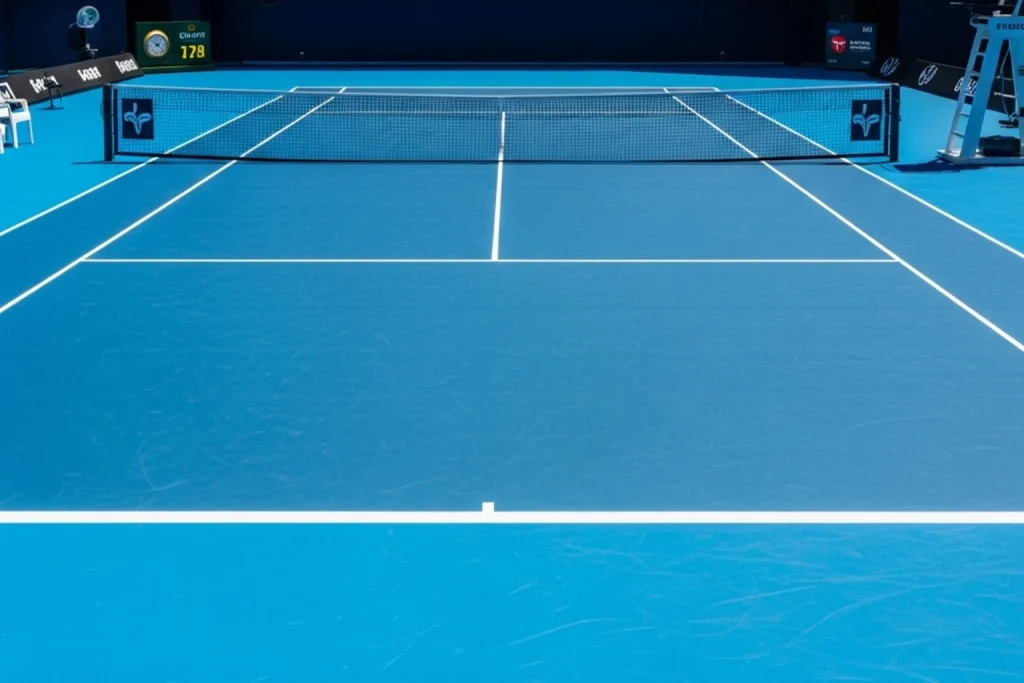
Evaluating Early-Season Trends at the Australian Open
The Australian Open always catches me slightly off guard. After six weeks of off-season, where form guides go stale and pre-season results are unreliable, the tour drops straight into a Grand Slam. I have learned that the first major of the year rewards bettors who pay attention to the off-season details that the wider market ignores — coaching changes, injury recovery timelines, and how players handle the Melbourne heat.
Melbourne uses a Plexicushion hard court surface, which plays medium-fast and provides a reasonably neutral baseline. First serve point won rates on hard courts sit at 75%, matching grass and well above clay’s 69%. But the Australian Open adds a variable no other Slam has to the same degree: extreme heat. Temperatures in Melbourne regularly exceed 35 degrees during the first week, and the tournament’s extreme heat policy — which can suspend play on outside courts, introduces scheduling chaos that the in-play markets struggle to price efficiently.
Off-Season Fitness and the Readiness Question
Every January I run what I call an “off-season audit” on the top 30 seeds. Who played exhibition matches in December? Who pulled out of early-season warm-up events? Who changed coaches during the break? These details do not move the outright market, but they create edges in first-round and second-round match pricing. A player returning from an injury who has played only one competitive match since October is vulnerable in the opening rounds, even if their ranking suggests otherwise.
The warm-up events in Brisbane, Adelaide and Auckland provide small-sample data that the market sometimes overweights. A player winning three matches at the Brisbane International does not mean they are in Grand Slam form — the fields at these events are thinner, and the match intensity is lower. I treat warm-up results as confirmation of fitness rather than form. If a player moved well and served consistently, that tells me their body is ready. The results themselves are secondary.
One pattern I have noticed over nine years: players who reached the second week of the previous year’s US Open and then took a full off-season without playing autumn events tend to arrive in Melbourne fresh and motivated. The market prices recent results, so a player with no competitive matches since September often drifts in the outright market. That drift is frequently undeserved.
Heat as a Betting Variable
Melbourne’s heat does not affect all players equally, and that asymmetry creates betting opportunities. Players from cooler climates — Northern European players, for instance, historically struggle more in extreme conditions than players who train in warm environments year-round. The ATP tour has become more global in its training base, so this is less pronounced than it was a decade ago, but the heat still matters in matches between players with different physical conditioning profiles.
When the Bureau of Meteorology forecasts temperatures above 38 degrees on a match day, I look for specific betting angles. Total games overs tends to hit more often in extreme heat, because both players fatigue as the match extends and the quality of play drops — more errors, more breaks of serve, longer sets. The over/under line on a match scheduled for the early afternoon in 40-degree heat should be different from the same match played under lights at 19 degrees, but the market does not always make that distinction.
The extreme heat policy itself is worth monitoring. If play is suspended on outside courts, the live betting markets freeze and then reopen when play resumes. Players handle interruptions differently — some lose rhythm, others use the break to cool down and regroup. Knowing your player’s history with heat-related interruptions is a small but genuine edge in the in-play market during the first week.
Night Sessions and the Different Court Under Lights
The Australian Open runs night sessions on Rod Laver Arena and Margaret Court Arena, and the conditions after dark differ from daytime play. Evening temperatures drop 10-15 degrees, the ball slows slightly in cooler air, and the court plays more like a medium-paced indoor hard court. Players who prefer controlled baseline exchanges tend to perform better in the night session than in the baking afternoon.
I track night session performance separately from day session performance for the top players. Some thrive under lights — they are more comfortable with the slower pace, the lower bounce, and the electric atmosphere. Others prefer the faster daytime conditions where their serve does more damage. When a matchup features one day-session specialist against a night-session specialist, and the match is scheduled for the evening, the night-session player’s price often contains value.
The scheduling itself is not random. Tournament organisers select the marquee matches for the night session, which means the best players appear under lights more often. But in the early rounds, an upset-minded qualifier or lower seed can find themselves on Rod Laver at night, and if their game suits the conditions, the price on them is worth a look.
The roof on Rod Laver Arena adds another variable. When closed for rain or extreme heat, the arena becomes a fully indoor court — no wind, consistent temperature, and a slightly different ball bounce. Players who train extensively at indoor events during the European winter tend to transition seamlessly under a closed roof, while those who prefer outdoor conditions can feel uncomfortable in the enclosed environment. I always check the weather forecast for match day and factor roof closure probability into my assessment of night session matchups.
Starting the Year With a Melbourne-Specific Approach
The Australian Open is the most structurally unique of the four Slams for betting purposes. The off-season gap creates information asymmetry that rewards research. The heat introduces a physical variable that the market struggles to price. And the night session dynamic splits the tournament into two different playing environments on the same surface. My approach is to spend the off-season tracking fitness updates and coaching changes, then arrive at the Australian Open with a shortlist of players whose prices do not reflect their readiness. The 13.83% growth rate in tennis betting means the market is getting sharper every year, but January in Melbourne remains the month where the early birds find the best value.
How does Melbourne"s extreme heat affect Australian Open betting?
Temperatures above 35 degrees increase physical strain, particularly in afternoon matches. Total games overs tends to hit more often in extreme heat as player errors rise. The extreme heat policy can suspend outside court play, creating in-play disruptions that affect momentum and odds.
Are Australian Open warm-up event results reliable for betting?
Treat them as fitness indicators rather than form guides. Warm-up events in Brisbane, Adelaide and Auckland have thinner fields and lower intensity. A player moving well and serving consistently matters more than whether they won or lost. Off-season coaching changes and injury timelines are more predictive.
