
French Open Betting Odds and Clay Court Strategies
 Available in US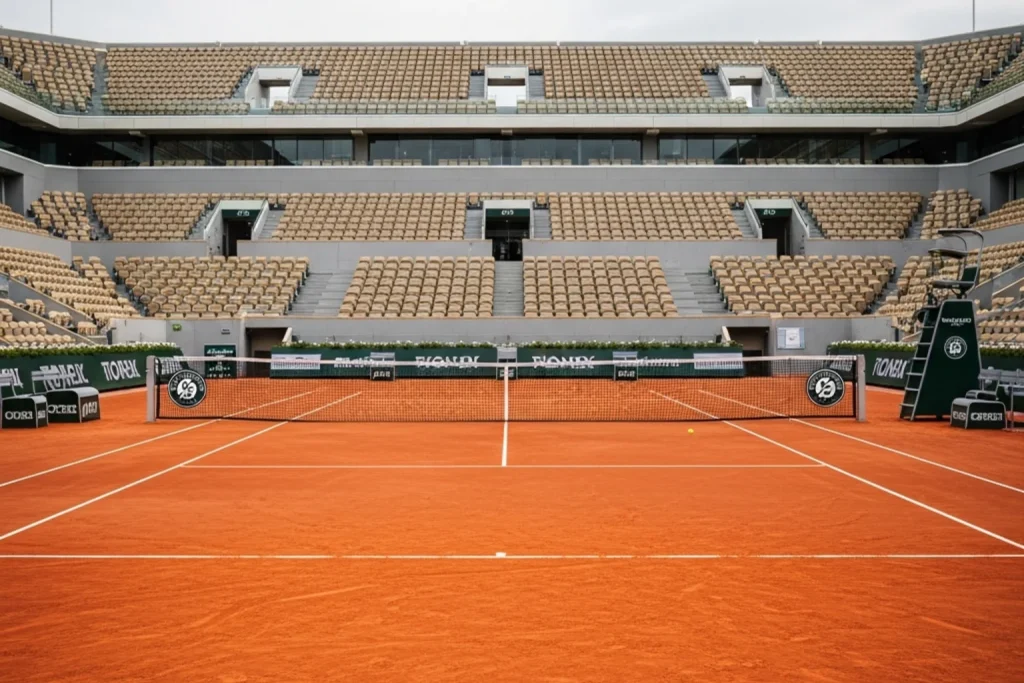
Roland Garros Market Variations and Betting Edges
The first time I bet seriously on the French Open I made the mistake every hard court punter makes — I looked at the rankings and assumed the form would carry over. It did not. A player I backed at 1.45 lost in straight sets to a clay specialist ranked 60 places lower, and the scoreline was not even close. That afternoon I started building a separate clay court model, and it remains the most profitable part of my betting year.
Clay accounts for 33% of the ATP tour calendar, which makes it the second most common surface after hard courts. But the French Open is the only Grand Slam played on the red dirt, and that uniqueness distorts the market. The PLOS ONE data tells the story clearly: first serve point won rates drop to 69% on clay versus 75% on grass and hard courts. That six-point gap means the server’s advantage shrinks, rallies extend, and matches become physical endurance tests rather than serve-and-return coin flips. For betting, this shifts value away from big servers and toward players who can grind.
How Clay Rewrites the Serve Equation
I track a metric I call “serve dependence” — the ratio between a player’s first serve points won and their overall points won. On hard courts, the top 20 players cluster around 0.72 to 0.76. On clay, that ratio drops to 0.65 to 0.70, because the surface neutralises serve speed. The ball bounces higher and slower off clay, giving the returner extra milliseconds to read the delivery and set up their position.
This creates a specific kind of pricing error at Roland Garros. Players who rely on serve speed — the sort who hold above 90% on hard courts, see their hold percentage drop by 5-8 percentage points on clay. But the market often prices them as though the drop will be smaller, because their ranking reflects results across all surfaces. When I see a big server drawn against a baseline specialist in the first three rounds, I check the clay-specific hold rates. If the server’s clay hold is below 78%, the underdog’s price almost always contains value.
Nadal’s 90.5% career win rate on clay with 63 titles and 14 French Opens was the extreme example, but the principle applies beyond one player. Clay rewards consistency over firepower. The players who dominate Roland Garros — and the ones who offer betting value, tend to have high return points won percentages and low unforced error counts, not massive first serve speeds.
The Physical Toll and Its Effect on Deep-Round Betting
By the second week of Roland Garros, the draw thins and the bodies ache. Clay court matches are the longest in tennis — best-of-five on the men’s side routinely exceeds three hours, and five-setters can push past four. The physical cost is cumulative. A player who has fought through two five-set matches in the first week arrives at the quarter-finals with heavier legs than a player who cruised through in straights.
I build this into my French Open betting in a simple way. After the third round, I look at total time on court for each remaining player. The difference between the player who has spent seven hours on court and the one who has spent twelve is real, and it shows up most clearly in the fourth and fifth sets of deep-round matches. If you are betting overs on total games in a quarter-final or semi-final, consider the fatigue profile. Two fresh players will produce a faster match than two players who have been grinding for a fortnight.
Women’s matches at Roland Garros carry a different dynamic. Best-of-three means fatigue is less of a factor, but the clay surface still favours players with strong return statistics and defensive consistency. The WTA draw at the French Open produces more upsets than any other Slam because the reduced serve advantage levels the field between seeds and unseeded players.
Weather, Roof and Scheduling Angles
Roland Garros added a retractable roof over Court Philippe-Chatrier in 2020, and it changed the betting landscape in ways the market still underprices. When the roof closes, the conditions shift toward indoor hard court characteristics — the ball moves faster through still air, the serve becomes more effective, and rallies shorten. If rain interrupts play and the roof closes mid-match, the in-play odds should adjust, but they often lag by several games.
I watch the Paris weather forecast obsessively during the French Open fortnight. A forecast of intermittent rain on a day when two baseline grinders are scheduled on Chatrier is a signal to wait for the roof closure and then back the player with the stronger serve. It is a niche edge, but in nine years of doing this I have found three or four opportunities per tournament where the roof-related shift creates genuine mispricing in the in-play market.
Scheduling also matters. Roland Garros has introduced night sessions under lights, and the conditions after dark are subtly different — cooler air makes the ball heavier, which benefits heavy topspin players. The night session draw is small enough that the market does not always differentiate between day and night conditions when pricing the match.
Outright Pricing in the Post-Nadal Era
For over a decade, the French Open outright market had a single structural feature: Nadal’s price anchored everything. With his retirement, the clay court outright market has opened up in a way I have not seen since the early 2000s. The favourite now trades around 3.00 to 4.00 rather than 1.50 to 2.00, and the field price has compressed. This means each-way outrights at the French Open offer better value than they have in years, because no single player dominates the clay court conversation the way Nadal did.
My approach to the French Open outright is to identify two or three players whose clay court metrics — return points won, break rate, physical endurance history — stand above the rest of the draw, then take each-way positions at the longest price available before the draw. The draw itself matters enormously. A player with a favourable quarter can reach the semi-finals without meeting a clay specialist, and at 20/1 or 25/1 with quarter-odds each-way to the semis, that path is worth backing.
Why is the French Open considered the hardest Grand Slam for favourites?
Clay reduces the serve advantage that top players rely on. First serve point won rates drop to 69% on clay compared with 75% on hard courts and grass. This narrows the gap between seeds and lower-ranked clay specialists, producing more upsets than any other Slam surface.
How does the Roland Garros roof affect in-play betting?
When the retractable roof on Court Philippe-Chatrier closes, conditions shift toward faster, indoor-like play. The serve becomes more effective and rallies shorten. In-play odds sometimes lag this adjustment by several games, creating a brief window of mispricing for punters who track the roof status.
