
Wimbledon Betting Odds and Grass Court Predictions
 Available in US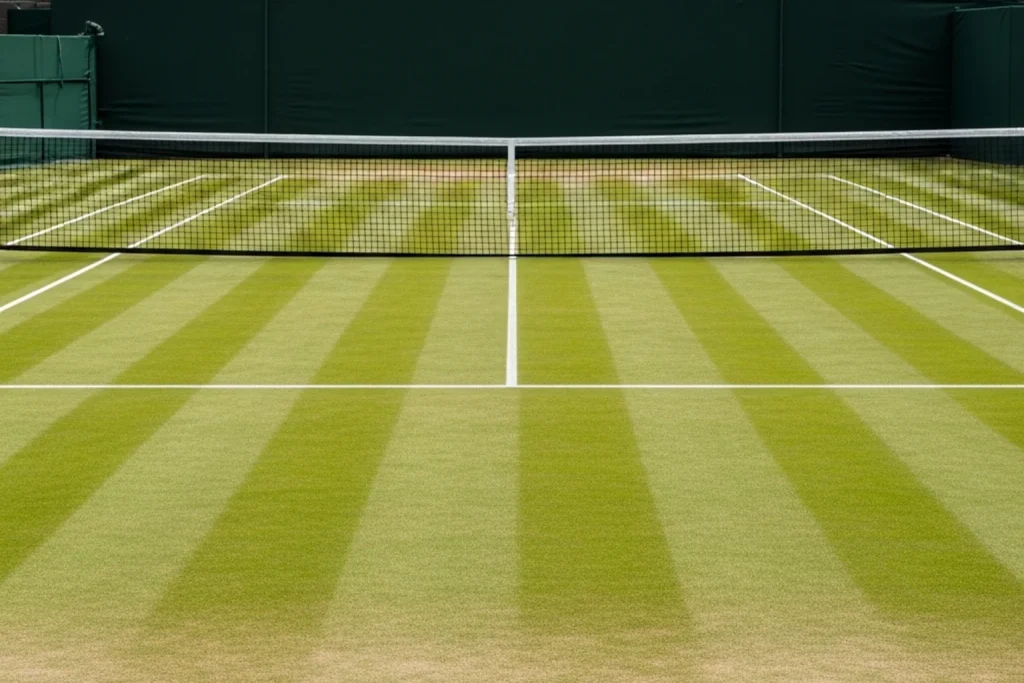
Evaluating Grass Court Strategies for Wimbledon Bets
I still remember the 2019 final — Djokovic saving two championship points against Federer, the match stretching past four hours on grass that was already chewed up. I had backed Federer on the match winner at 2.10 and watched my ticket evaporate in a fifth-set tiebreak. That day taught me something the odds never quite capture: Wimbledon does not reward the player who plays best over three hours. It rewards the player who holds nerve in the moments that grass amplifies beyond any other surface.
Wimbledon stands apart in the betting calendar for structural reasons, not just prestige. It is the only Grand Slam played on grass, a surface that accounts for just 11% of the ATP tour schedule. That scarcity creates pricing inefficiencies. Bookmakers build their models on hard court data because 56% of matches happen there, so when the tour shifts to SW19, the models lean on smaller samples and wider margins. For punters willing to dig into serve metrics, that gap between the line and reality is where the edge lives.
Why Grass Court Data Creates Pricing Gaps
Have you ever wondered why a player ranked 40th can suddenly look like a genuine contender at Wimbledon but not at the Australian Open? The answer sits in how grass changes the fundamental balance of a tennis point. First serve point won rates jump to 75% on grass compared with 69% on clay — a gap the PLOS ONE researchers documented across Grand Slam data. That six-percentage-point swing rewards big servers disproportionately and punishes baseline grinders who thrive on longer rallies.
This matters for betting because the markets price players largely on their overall ranking and recent form. A hard court specialist who has spent three months collecting points on acrylic will carry a lower price than his grass court record deserves, while a serve-and-volley player whose ranking suffered during the clay season gets overlooked. The two weeks of grass court warm-up events before Wimbledon — Queen’s, Halle, Eastbourne, produce limited data, and bookmakers know it. They compensate by widening their margins on early-round Wimbledon matches, which means the overround on a first-round match at the All England Club is often 5-7% compared to 3-4% during the hard court swing.
I track a simple metric every June: first serve points won on grass over the previous 12 months, filtered by players in the Wimbledon draw. The players whose grass numbers deviate most from their overall tour average are the ones where the market is most likely to misprice. It is not a magic formula, but it has pointed me toward value in at least a dozen Wimbledon matches over the past five years.
Draw Structure and the Shape of Early-Round Value
Wimbledon uses a 128-player draw with 32 seeds. The draw ceremony happens on the Friday before the tournament, and that is when I start building my shortlist. Early rounds at Wimbledon produce upsets at a higher rate than the other Grand Slams, partly because grass rewards aggressive play and partly because many players in the draw have spent the previous two months on clay — a surface that demands the opposite skill set.
The transition factor is real. A player who reached the semi-finals at Roland Garros has had roughly three weeks to switch from sliding on dirt to moving on a slick lawn. Some make that transition well. Others carry clay-court habits into their first Wimbledon match and look half a step slow. I pay close attention to how players performed in their most recent grass court event. A first-round exit at Queen’s does not always mean poor form — it can mean a player used that match to readjust timing and movement. But a player who skipped the grass warm-up entirely and arrives at Wimbledon straight from a clay event is a red flag, regardless of ranking.
The betting angle here is straightforward. When a high seed draws a qualifier or lucky loser who happens to have a grass court pedigree — a big serve, a willingness to approach the net, comfortable on faster surfaces, the price on the underdog often understates their chances in round one. These are the matches where I look at the surface-specific betting data most carefully.
In-Play Dynamics on Grass: Speed, Breaks and Momentum
Ninety percent of tennis bets at Entain brands are placed in-play, and Wimbledon is where that number probably climbs even higher. Grass court matches flip faster than matches on any other surface. A single break of serve can decide a set because service games are so dominant — hold percentages on grass regularly exceed 85% at the top level. That means the odds swing violently on every break point, and the in-play markets reward punters who understand the rhythm of a grass court match rather than just watching the scoreboard.
I have a rule for Wimbledon in-play that has served me well: ignore the first four games. On grass, players need time to find their timing. The returner especially needs a few games to read the server’s patterns on a surface where the ball stays low and skids through. After four games, the service hold rate stabilises, and you get a clearer picture of whether the match will be tight or one-sided. If both players are holding comfortably through five or six games, the tiebreak market becomes interesting. Grass produces more tiebreaks than either hard courts or clay, and the “will there be a tiebreak” market often sits around 1.80 at the start of a set between two strong servers — a price that underestimates the frequency on this surface.
The other in-play edge is the retirement factor. Grass is the most physically unforgiving surface — players slip, strain muscles on the low-traction turf, and the stop-start nature of serve-dominated points can aggravate existing injuries. Wimbledon historically sees more mid-match retirements than the other Slams. Understanding your bookmaker’s retirement rules, whether your bet stands or gets voided, is essential before placing any in-play wager on grass.
Outright and Set Betting Markets Worth a Second Look
Last summer I placed an each-way outright on a player at 66/1 for the Wimbledon title. He reached the quarter-finals, and the each-way portion at quarter-odds returned a decent profit even though he lost in four sets. The outright market at Wimbledon tends to compress around three or four favourites, leaving the rest of the field at inflated prices. Each-way betting — if your bookmaker offers it to the semi-finals or quarter-finals, exploits this compression nicely.
Set betting is another Wimbledon speciality. Because grass court matches between evenly ranked players tend to be tight, the 3-2 or 2-1 correct score lines carry better value than on hard courts. The key stat: on grass, the percentage of five-set matches in men’s Grand Slam draws has historically been higher than on other surfaces. Women’s matches at Wimbledon, played in best-of-three format, also see a higher rate of 2-1 results compared with the hard court Slams because the serve advantage narrows the gap between the favourite and the underdog.
One market I avoid entirely at Wimbledon: total games unders in men’s matches between two servers. The margin is heavily juiced because bookmakers know punters love to back unders on grass, and the overround on those lines is often north of 8%. If you want to play totals, the overs line on a second- or third-round match where a big server faces a returner is usually priced more fairly.
The Fortnight in Your Betting Calendar
Wimbledon is not just another Grand Slam in betting terms — it is the only annual window where grass court edges are available at the highest level. The scarcity of grass in the 11% slice of the ATP calendar means the data is thinner, the markets are wider, and the opportunities are real for anyone willing to do the surface homework. My approach has always been to spend the clay season building a database of serve metrics, then apply it aggressively once the tour moves to grass. The two weeks at SW19 are where nine years of tracking first serve percentages and hold rates pay off most reliably. Treat Wimbledon as a specialist assignment, not a casual flutter, and the grass court edges will be there.
When is the best time to place Wimbledon outright bets?
The best value on Wimbledon outrights is before the draw ceremony on the Friday prior to the tournament. Once the draw is released, prices on players with favourable paths shorten quickly. Each-way outrights at quarter-odds to the semi-finals offer a cushion if your pick reaches the last eight.
Does grass court form from warm-up events predict Wimbledon success?
It helps but is not definitive. Players who perform well at Queen"s, Halle or Eastbourne show they have adjusted to grass, but some top players deliberately use warm-up events for practice rather than results. The more useful signal is first serve point won percentage on grass over the past 12 months.
Why do Wimbledon matches produce more tiebreaks than other Grand Slams?
Grass favours the server because the ball stays low and skids through faster, making returns harder. Hold percentages on grass are the highest of any surface, so sets reach 6-6 more often. The final set at Wimbledon now uses a tiebreak at 6-6, adding to the frequency.
